
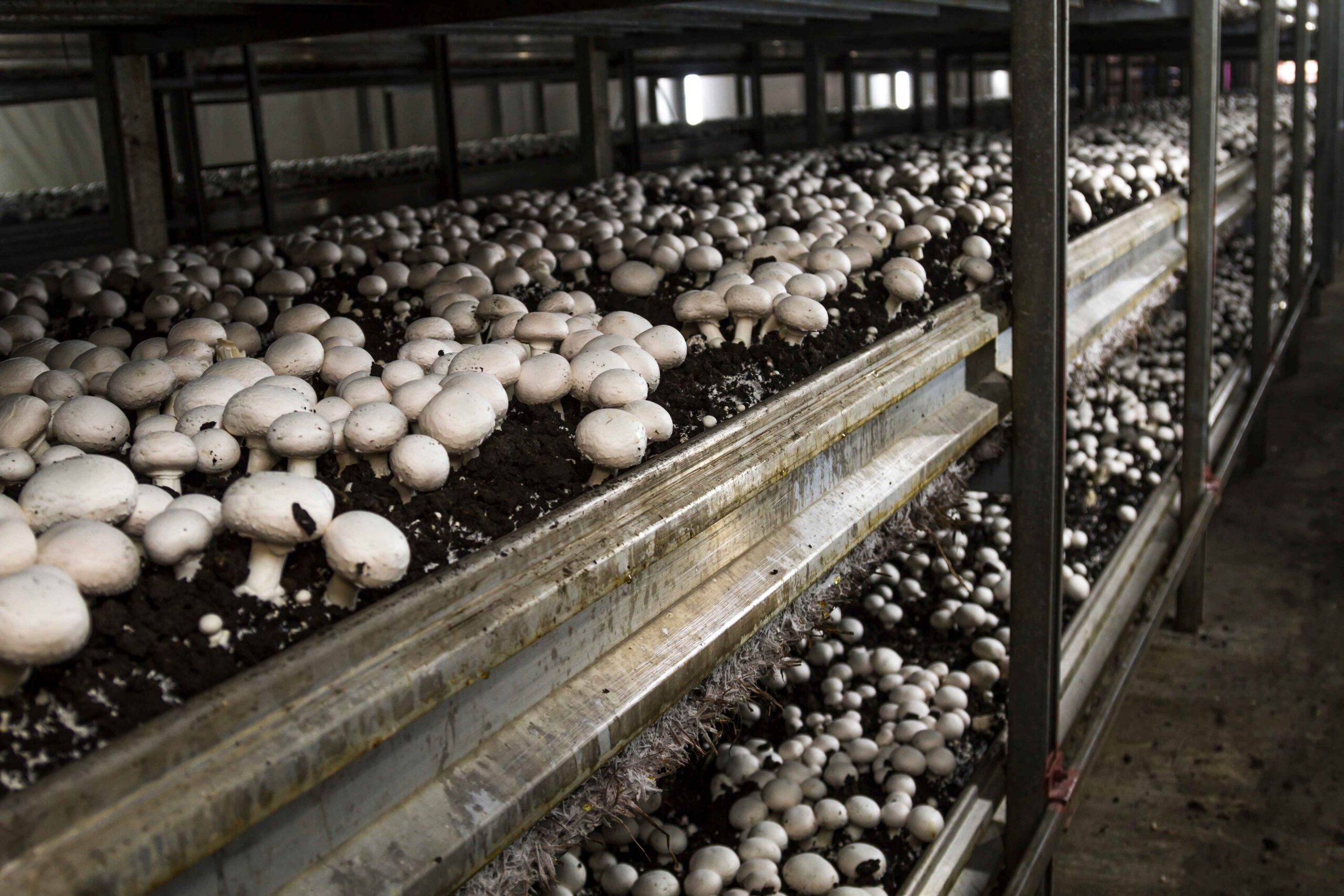
About Course
Welcome to the Grow—your comprehensive guide to mastering the art and science of growing Agaricus bisporus, one of the world’s most popular and economically valuable mushrooms. Whether you’re a farmer looking to diversify your income, an entrepreneur exploring agribusiness opportunities, or a hobbyist eager to grow your own fresh mushrooms, this course will equip you with the essential knowledge and practical skills needed for successful cultivation.
Button mushrooms are prized for their mild flavor, nutritional benefits, and high demand in global markets. However, their cultivation requires precise techniques—from substrate preparation and composting to climate control and harvesting. This course breaks down each step of the process, blending theory with hands-on practices to ensure you can confidently produce high-quality yields.
By the end of this training, you’ll understand:
✅ The biology and growth cycle of button mushrooms.
✅ How to prepare substrates for optimal yield.
✅ Best practices for spawning and casing.
✅ Pest/disease control and post-harvest handling.
Join us to unlock the potential of mushroom farming—a sustainable and profitable venture with low space requirements and high returns. Let’s grow together!
Course Content
Introduction
-
Who is this course for
00:00 -
Course outline
00:00
Module 1
-
1. Importance of agriculture
00:00 -
2. History of mushroom cultivation
00:00 -
3. Button mushrooms
00:00 -
4. Main facilities of a mushroom farm
00:00 -
5. Growing Cycles
00:00
Module 2
-
6. Composting process
00:00 -
7. Main elements of a compost
00:00 -
8. Types of straw
00:00 -
9. Chemical composition of wheat straw
00:00 -
10. Nitrogen rich materials
00:00 -
11. Chicken manure
00:00 -
12. Horse manure
00:00 -
13. Alternative nitrogen sources
00:00 -
14. Synthetic nitrogen sources
00:00
Module 3
-
15. Compost features
00:00 -
16. Proper compost moisture
00:00 -
17. Aeration
00:00 -
18. Ammonia
00:00 -
19. Importance of microbes
00:00 -
20. Easy formula
00:00 -
21. Nitrogen based formula
00:00 -
22. C to N ratio based formula
00:00 -
23. Formula with horse manure
00:00 -
24. Formula with soy
00:00
Module 4
-
25. Module 4 overview
00:00 -
26. Controlling aeration
00:00 -
27. Required density
00:00 -
28. Volume
00:00 -
29. Aeration and density
00:00 -
30. Composting space and tools
00:00 -
31. Soaking straw
00:00 -
32. Sprinkling straw
00:00 -
33. Premixing
00:00 -
34. Deciding moisture of compost heap
00:00 -
35. Making the heap
00:00 -
36. After making the heap
00:00 -
37. Compost turns
00:00 -
38. Moisture losses
00:00 -
39. Making the first turn
00:00 -
40. Adding gypsum
00:00 -
41. Between turns
00:00 -
42. Second turn
00:00 -
43. Third and fourth turns
00:00 -
44. Phase 1 duration
00:00 -
45. Lignin layer
00:00 -
46. Organic matter reduction
00:00 -
47. Phase 1 compost
00:00
Module 5
-
48. Module 5 overview
00:00 -
49. Phase 2 goals in detail
00:00 -
50 Ammonia effect on spawn run
00:00 -
51. Aligning Phase 2
00:00 -
52. Launching Phase 2
00:00 -
53. Phase 2 compost moisture
00:00 -
54. Filling the bags
00:00 -
55. Phase 2 compost features
00:00 -
56. Time management
00:00
Module 6
-
57. The growing room
00:00 -
58. Designing the farm
00:00 -
59. Watering tools
00:00 -
60. Designing the shelves
00:00 -
61. Assembling the shelves
00:00 -
62.. Ventilation in mushroom farm
00:00 -
63. Ventilation sections
00:00 -
64. Ventilation duct parameters
00:00 -
65. Making a ventilation duct
00:00 -
66. Final steps
00:00 -
67. Importance of the right passages
00:00 -
68. Production scope
00:00
Module 7
-
69. Different growing systems
00:00 -
70. Arranging compost
00:00 -
71. Mushroom mycelium
00:00 -
72. Spawning
00:00 -
73. Spawn run
00:00 -
74. Factors affecting phase 3
00:00 -
75. Activity of compost
00:00 -
76. Process of spawn run
00:00 -
77. Loosening phase 3 compost
00:00 -
78. Overmoistened compost
00:00 -
79. Adding mushroom supplements
00:00
Module 8
-
80. Casing layer
00:00 -
81. Sphagnum peat advantages
00:00 -
82. Casing layer features
00:00 -
83. PH
00:00 -
84. Applying the casing
00:00 -
85. Water quantity
00:00 -
86. Watering the casing
00:00 -
87. Watering schedules
00:00 -
88. Climate settings
00:00 -
89. Loosening the casing
00:00
Module 9
-
90. Cooling phase
00:00 -
91. Fruiting phase
00:00 -
92. Evaporation
00:00 -
93. Watering mushrooms
00:00
Module 10
-
94. Harvesting phase
00:00 -
95 The yield
00:00 -
96. Harvesting duration
00:00 -
97. First flush
00:00 -
98. Watering between flushes
00:00 -
99. Second flush
00:00 -
100. Third flush
00:00
Module 11
-
101. Mushroom disorders and diseases
00:00 -
102. Using chemicals
00:00 -
103. Bacterial blotch
00:00 -
104. Competing molds
00:00 -
105. Coprinus mushrooms
00:00 -
106 Applying chemicals
00:00 -
107. Farm disinfection
00:00
Module 12
-
108. Growing scale
00:00 -
109. Output level
00:00 -
110. Growing in a tent
00:00 -
111. Selling mushrooms
00:00 -
112. Calculating costs
00:00